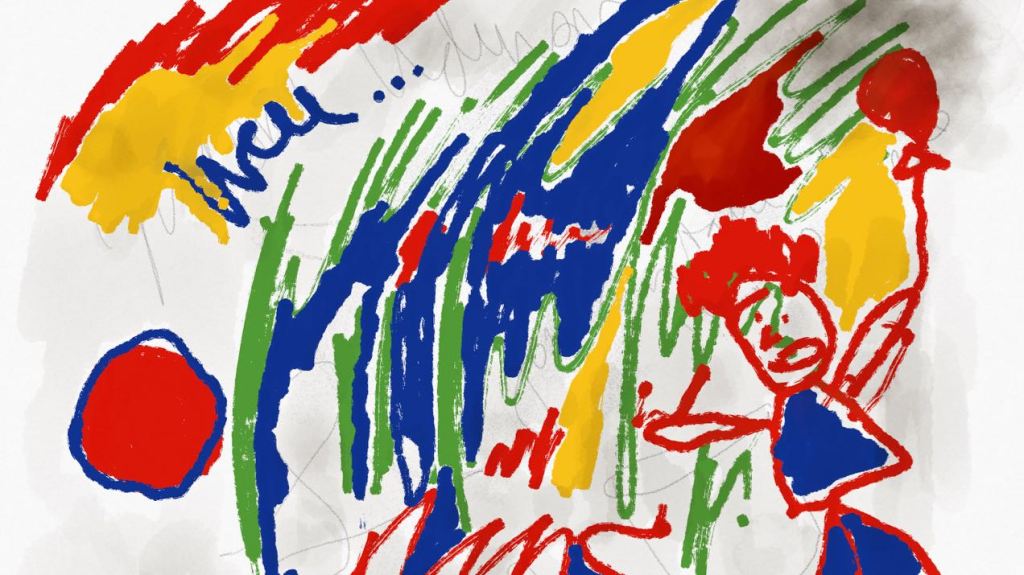
COVID-19 is born
It is quite the time to start a blog. COVID-19 is rampaging through the human race, and I live in New York, the current U.S. epicenter, though I am not near any of the hospitals that have been saturated with COVID-19 patients. I know people who are, and when they walk outside they wonder how close it is.
A month ago, it was still possible to ignore it. I was a couple weeks ahead, thanks to insurgents and outsiders, but that wasn’t reassuring. Time was suddenly our most valuable national resource, and I watched us squander it.
Time as its more common function, a scheduler, compressed. Minutes and hours passed normally, then felt like weeks. Systems representing centuries of evolution wound down essentially overnight. It can be startling to remember that we are our planet’s dominant species.
A personal blog is an antidote to mass media
So, a blog.
Part of it is personal sensory overload, system shutdown, an itch for something else. I read a lot. Get through the day with all the relevant news to stay safe, discover that the publications I read precisely because they are not about the news are only about the news. Who knew coronavirus had so many angles?
It isn’t enough that our immune and healthcare systems are exposed to this virus; we must also subsume our cultural soul into it. We must be awed by it, perhaps even more so given that we can see it only as an artistic rendering, or on a bioscan, or as it ravages someone we know, war harvested in the fevered, fighting body.
Coronavirus was destined to be the Media Event of the Century, though what does that mean? The soul of the United States is a media event. Case/death tickers on cable news like box scores on ESPN: it is not worthwhile to know the data, which are meaningless anyway, if you cannot know it every moment.
There is a frustrating parallel. To the way we, our country, give ourselves to the inventions we cannot see absent more invention. Patient Zero of the modern world is the machine, which at its most evolutionary we use to make stuff we need and at its most stagnant we program to automatically remind us that all our tangential inventions—fame, wealth, outsourcing, offshoring, efficiency, consolidated power—are real.
The reality now presents the killer bundling op. Everyone in the country glued to the singularity. An infinite-part real-time episode about how global supply chains, which lifted some people out of poverty and pushed many more into it so goods could remain cheap and executives rich, are also killing hundreds of thousands of us.
COVID-19 is like 9/11
Another reason for the blog is the B.C./A.D. element. I felt this way about 9/11 (if it happens twice in twenty years is it really that significant?), but I was merely a high school senior; and I got to go to school the next day.
That Tuesday morning, though, was knee-bucklingly bleak. I walked out early, once it became clear that all anyone was doing was finding classrooms that had TVs, and drove to Wendy’s with a close friend (where we watched TV). By coincidence, the last thing I did before coronavirus infiltrated everything was talk to the same friend, only this time we were on the phone, in different countries, and I was driving to Target.
So the blog. If the timing is right, in its weird way, the form is too. This may seem more counterintuitive, at least from the perspective that the blog has been dead for a decade (after having live just ten years). The blog is (too) easily an object of (lazy) scorn and (collapsible ironic) derision. What young person, instructed to build their brand and monetize their mind, would blog their content, unless they were, like, baking black bean brownies? What influencer would write? (A/V-adjacent #motivation does not count.)
The blog’s advantage is that it is not a propriety eponym du jour. Blogging is not an Inc or an LLC. Blogging is writing. Factum, datum, analysis. Reflection, narrative. Idea/connection. Language-style. A space to write what you want, how you want, because you want.
Blogging beats everything
Here’s why.
Twitter is a bummer
Twitter is too atomic. It can be an effective PR tool for established organizations, it can be an effective propaganda tool for corrupt politicians. It can mobilize the masses. It is an information landfill for journalists and a content mill for readers. That’s all great, I guess. But mostly Twitter offers infinite expressions of the most vicious, vapid, and dull linguistic creativity, at the cheapest price. Because, really, it is just a massive, lawless public chatroom.
Facebook sucks
Have you ever heard of the user who creates an account, deletes their account, resuscitates their account, deletes their account, revives their account, then deletes their account for good, only to discover it was actually only deactivated all those times, and then spends an hour chasing down the GONE FOREVER button?
Newsletters are not my thing
Experts, academics, and cultural-creatives are building their brand this way. To do it you almost always need institutional undergirding. Entrepreneurial strategery is an alternative/supplement. It helps to have something to say every third day. A think-tank-y thing. Cold analysis garnished with character. And inescapably the news, regardless of the letter.
Art by Masha Udensiva-Brenner.

 Nathan Schiller
Leave a reply to 2020 year-in-review: A year we basically have to remember | Nathan Schiller Cancel reply