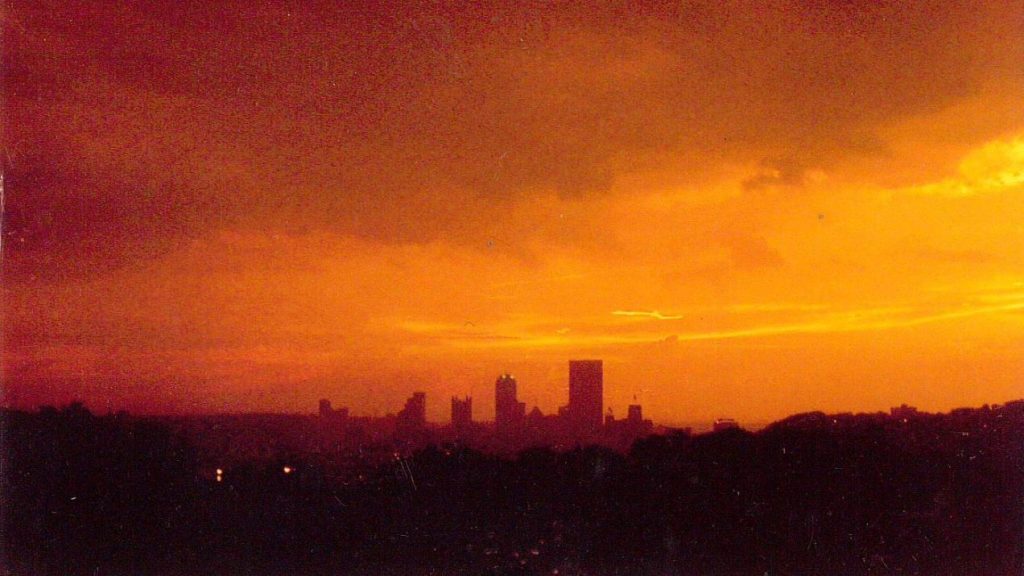
Growing up, I attended four public city schools. If I had to rank them by how vibrant they were, how much I enjoyed them, how much I got out of them, I would say middle school was the worst, kindergarten was kindergarten, and high school was pretty good—but my elementary school was special.
The ranking is, of course, arbitrary. My middle school, for instance, had some good teachers, a diverse student body, and an enthralling location, on the University of Pittsburgh’s urban campus. I had good friends. But at ages twelve through fourteen, metaphysical confusion and social brutality are norms.
Anyway, I was, by then, old enough to grasp that the exciting stuff was coming. High school kids could drive and vote and grow sideburns. These responsibilities open up the world. Sophomore year, I could feel everything changing in real time. I had the friends and the teachers, the relationships and the activities on which to base a life.
In elementary school, you are shepherded through your day. But it’s your first impression of institutionalized education. Everything feels enormous.
East Hills Elementary School
My elementary school, East Hills, was a magnet school led by a sharp, gregarious principal who led 30 teachers for 600 students from the segregated neighborhoods of Pittsburgh’s East End. It was a learning environment that fostered creativity and curiosity among kids from all different backgrounds. We learned French and staged plays in it, invented playground games and leagues, and our parents started math clubs and organized fairs.
The building was an adventure. Designed by a noted Pittsburgh architect, its concrete modernist slabs were facades. Inside was bright and airy—all those ramps and annexes and open areas of foliage and art and water. One day, sitting at my fifth-grade desk, I kept tapping a hollow square of carpet. My teacher played it straight. Who know what was below? Maybe it was a secret bunker, the place we’d hide if one of our duck-and-cover drills turned out to be the real deal.
The East Hills Shopping Center
The school was located in one of the city’s lowest income neighborhoods. I saw this every day at the East Hills Shopping Center, a half-mile from school. Built atop a hill around 1960, the center was, initially, a relatively glamorous outdoor middle-class mall, with a Horne’s department store and traffic lanes named after U.S. presidents. By the time I encountered it, thirty years later, it had been largely abandoned.
While the Greater Pittsburgh Region, which sprawls into Ohio and West Virginia and Maryland, contains roughly three million people, the city itself is small: 300,000 residents throughout 100 neighborhoods. But the hills, sometimes rolling, oftentimes dramatic, can have an isolating and disorienting effect. You can get anywhere without being able to articulate how you got there, just that you went up Forbes, down the Parkway, across that bridge, up that cut, and back on the boulevard.
Every day, for five years, the bus swung through our quiet, hilly residential neighborhood, before heading down four-lane roads lined with dive bars and fast food joints and stone churches and drab office buildings. Human foot traffic must have been sparse, but I remember exciting things happening outside, perhaps because an elementary school bus is a high-octane social ecosystem unto itself (the fifth-grade patrols, the candy entrepreneurs, etc.).
Eventually, the bus reached the old shopping center, traveling on the precarious outer edge, separated from a shrubby cliff by a chain-link fence. To our left were hundreds of empty parking spots and the crummy structure. The pavement was so pot-holed that we bounced out of ours seats like we were at an amusement park. In the back, where the fifth graders sat, the air was so big you could hit your head.
Recently, I was thinking about bouncing on those potholes, and found a photo of the route in an album from Dorsett Studios. It evokes such personal memories, but I now also see them in a larger, more unfortunate story about American attitudes toward public education. By the time I graduated college, East Hills Elementary School’s student body and teaching staff had fallen by 50 percent, and its diversity had plummeted. It closed in 2008, and a religious school eventually moved in.
Pittsburgh problems, America problems
But this is a superficial story, or at least an incomplete rendering. As Robert S. Dorsett’s photos show, the story of Pittsburgh in the latter half of the twentieth century is deindustrialization. And, as Matthew Newton wrotenine years ago, referencing the East Hills photos, that story is inseparable from one of suburban decline.
I have no idea how to tell those stories. They were everywhere, but I didn’t live them. In the three years before I was born, the region lost nearly ten percent of its one million manufacturing jobs. But my parents weren’t in the industry, and it had been good to the one person in my family who had been: my grandfather, who, having gotten in during the boom years, raised a family of five by working for a railroad for a half-century.
The story of a successfully integrated public school in a city losing more than half its population sounds improbable. But I don’t know how to tell that particular story either. Growing up, I knew little about my city’s politics and less about public policy. Still, it was obvious that East Hills Elementary was both a gem and an anomaly, a bizarre refraction of America’s greatest aspirations and greatest shames.
Pittsburgh is a city where tens of thousands of Black people were forced from the historic Hill District to make way for an arena that hosted hockey games, monster truck rallies, and high school graduations, and has since been demolished. It’s a city that can earn multiple “Most Livable” labels while uniquely failing Black women. It is as attractive, pleasant, and unequal as anywhere in this country. An All-American city indeed.

 Nathan Schiller
Thoughts, ideas, comments?